

Kleinostheim, May 05, 2022.
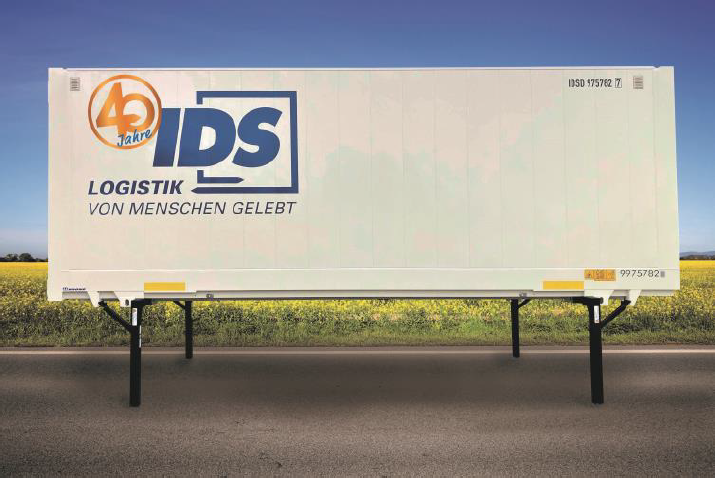
Small things can become big things. In 1982, eight well-known, medium-sized and regionally strong freight forwarders joined forces to establish a cooperation for the general cargo sector for the first time. This was the birth of IDS, the first and still the largest German general cargo cooperation.
The founders were already aware at the beginning of the 1980s that, as medium-sized companies, they needed a nationwide network in order to be fit for the future. The aim of the foundation was therefore “to help each member to improve their own business by exchanging experience, data and personnel, with complete economic independence for each individual”. This is stated in the founding minutes. This idea of jointly realizing nationwide general cargo transports at a high level of quality is as relevant today as it was 40 years ago. It is also reflected in the name: IDS stands for “Interessengemeinschaft der Spediteure”.
Strong network
IDS offered the parties involved the opportunity to link their own strong regional transport business to the supra-regional market – throughout Germany. And instead of many contracts with different forwarding companies for the transportation of goods throughout Germany, the customer has just one central point of contact.
Seven shareholders, four franchisees, 51 general cargo depots, 16.6 million consignments and over 7,000 employees are the current key figures for the largest general cargo cooperation in Germany. The IDS network of locations is tightly knit.
“The principle of cooperation with equal partners has proven its worth to this day,” explains Michael Bargl, IDS Managing Director. “Precise logistics requires an excellently functioning network and people who bring this network to life competently, responsibly and with reliable quality down to the smallest detail.”
Whether convincing service packages, high quality standards or innovative solutions: Two key success factors of IDS are that there are reliable rules for everyone and fast decision-making processes thanks to a well-functioning committee structure. This means that crises such as coronavirus, extreme shipment volumes or a cyberattack can be managed quickly and professionally. “But cooperation is not a walk in the park, it’s hard work. As one of the founding fathers said. Especially when we are struggling to find the best solution. But that’s exactly what IDS is all about. Tough in the matter, fair in our dealings and always looking for the optimum,” explains Michael Bargl. “This is precisely the secret of IDS and it is our recipe for success.”
Continuous growth
In the past ten years alone, the national shipment volume has increased from 9.4 to 13.3 million shipments – with strong seasonal fluctuations. The basis for the consistently high quality and stability of the IDS network is, among other things, the cooperation partners’ continued willingness to invest. Eight new depots have been added in the past ten years, and the total IDS terminal area has increased by 24 percent since 2011. And the plan is to expand the IDS network from 51 to 60 locations over the next ten years. An important measure to manage growth is the consistent double staffing of IDS depots in metropolitan regions and fast-growing areas such as Berlin, Hamburg, Munich, Frankfurt and Stuttgart.
Innovative concepts
IDS set standards then and now. As a driving force for the general cargo market, IDS has done a lot of pioneering work and prepared industry standards. While the introduction of IDS ONE DAY in 1989 with the Germany-wide 24-hour regular service as a standard service was considered groundbreaking, current examples include private customer deliveries in the general cargo market with automated
recipient identification and notification or the GPS-based tracking of all IDS swap bodies for transparency regarding the arrival times of main runs.
In addition to developing new products and identifying trends, it is the task of the IDS system headquarters, the heart of the network, to consistently monitor the quality of services and permanently optimize processes. A particular challenge for the coming decade will be the energy transition in general cargo logistics.
The IDS successes of the last 10 years
| 2011 | 2021 | Change in | |
| Locations | 43 | 51 | + 19 % |
| Turnover in € | 1.71 billion | 2.63 billion | + 54 % |
| National shipment volumes thereof B2C | 9.4 million 0.1 million | 13.3 million 2.2 million | + 42 % |
| Total terminal area | 295,000 square meters | 365,000 sqm | + 24 % |
IDS Logistik GmbH – The general cargo network in Germany:
With 51 locations, 16.6 million shipments (2021) and around 7,300 employees, IDS Logistik GmbH is the largest general cargo cooperation in Germany. IDS carries out transports to other European countries with the national companies of its franchisees and with selected European partners. The full-service offering ranges from procurement, storage and distribution to returns management. The company serves clients from the B2B and B2C shipping sectors.